Rock slope deformation bodies will be extremely active from the beginning of deformation to brittle failure, producing a large amount of precursor information. This information has important research value for monitoring and early warning of geological disasters. Existing research methods include: ① InSAR , which can only reflect surface deformation within a certain time scale and cannot be monitored in real time; ② Ground monitoring technologies such as GPS can only achieve sub-centimeter to centimeter-level surface deformation measurement accuracy. To this end, the research team innovatively introduced a microseismic monitoring network to monitor the dynamic evolution of the internal structure of the deformation body in a long-term, remote and real-time manner, thereby achieving spatio-temporal prediction of future geological disaster events. The work can be divided into the following four aspects:
1. Inversion of deformable body structure:
Seismographs are deployed at high density and in all directions within the deformation body to obtain accurate microseismic data. The Horizontal Vertical Spectral Ratio ( HVSR ) method is used to obtain the internal velocity model of the deformation body and invert the slope velocity structure to identify and analyze the geometric characteristics of the main geological interface of the slope (including interface depth, slope, slope aspect and elevation distribution rules, etc.) , providing a geological structural basis for exploring the development mechanism of slip surfaces.
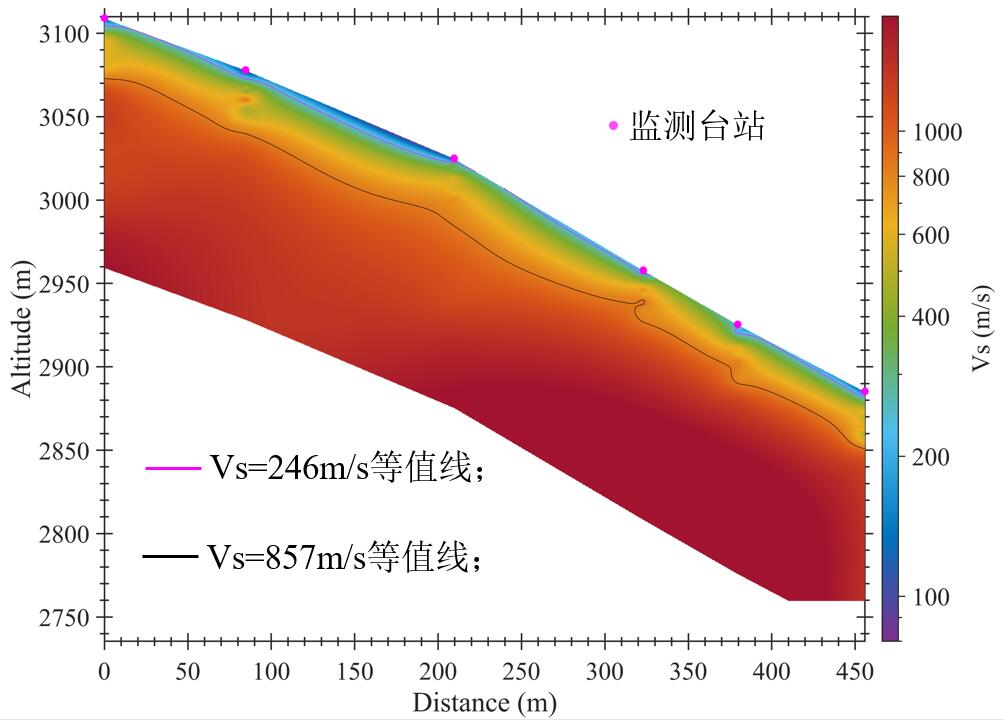
Figure 1. Example of Vs (shear wave velocity) structural profile along the survey line
2. Intelligent identification of abnormal event signals related to structural changes :
Identify and analyze the characteristics of abnormal signals recorded by the microseismic monitoring network, and form a systematic theory of waveform characteristic analysis. Use this as a guide to train a deep learning model to achieve automatic and intelligent identification of abnormal signals.
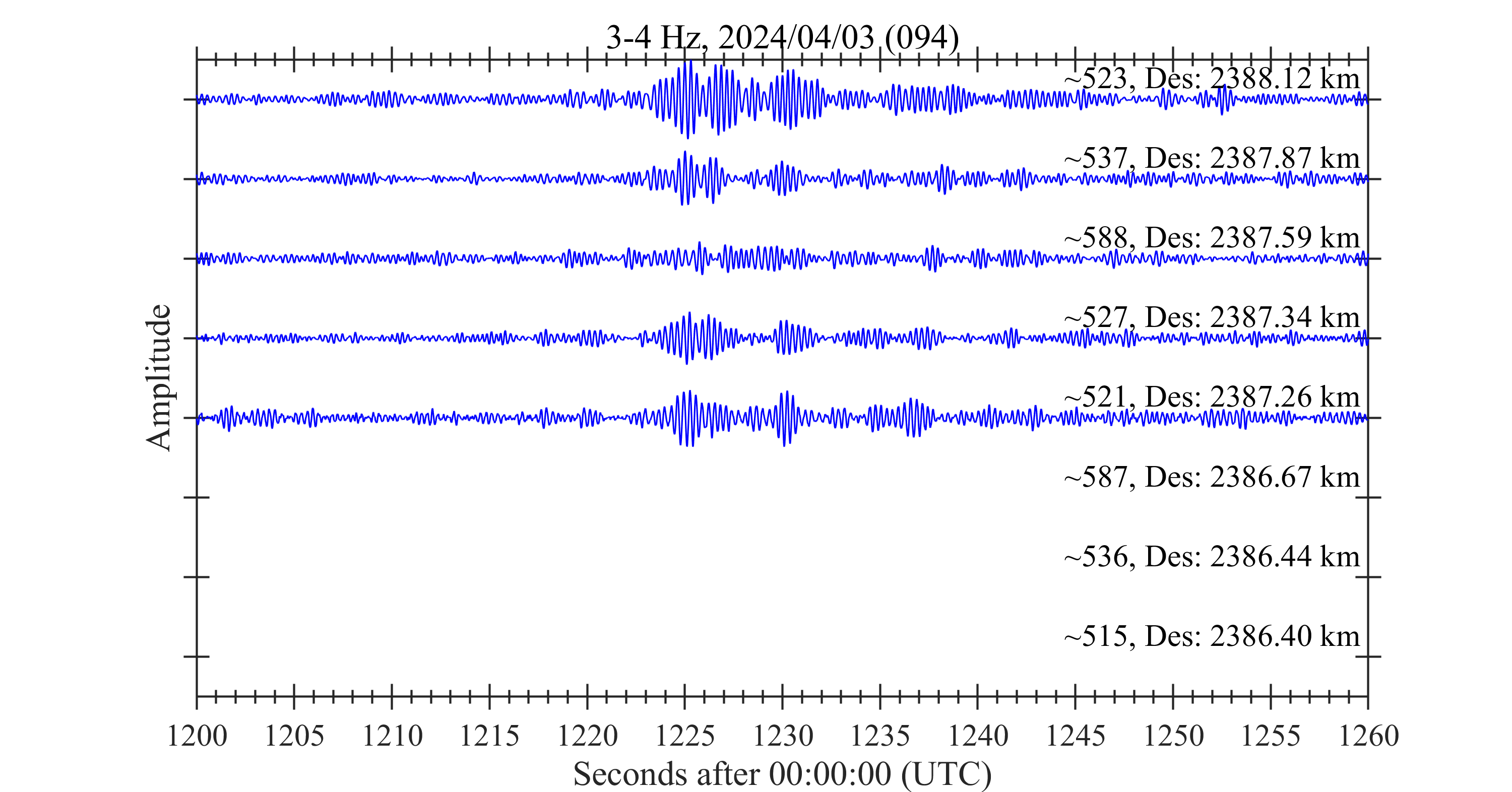
Figure 2. Example of abnormal event waveform
3. Three-dimensional positioning of abnormal events:
By solving the 3D Eikonal equation and applying the fast marching method ( FMM ), abnormal events are located in three dimensions.
4. Predict the spatiotemporal evolution rules of deformation bodies and build an earth disaster monitoring and early warning system:
Analyze the energy, location and time distribution patterns of abnormal events, study the correlation between abnormal events and disasters, establish a spatiotemporal evolution model of deformation bodies, and develop ground disaster monitoring and early warning technology based on multi-source data fusion. Combining numerical simulation and machine learning algorithms to achieve dynamic assessment and early warning of earthquake disasters. Ultimately, a large-scale rock mass earthquake monitoring and early warning system will be established to improve earthquake prevention and emergency response capabilities and minimize losses caused by geological disasters.